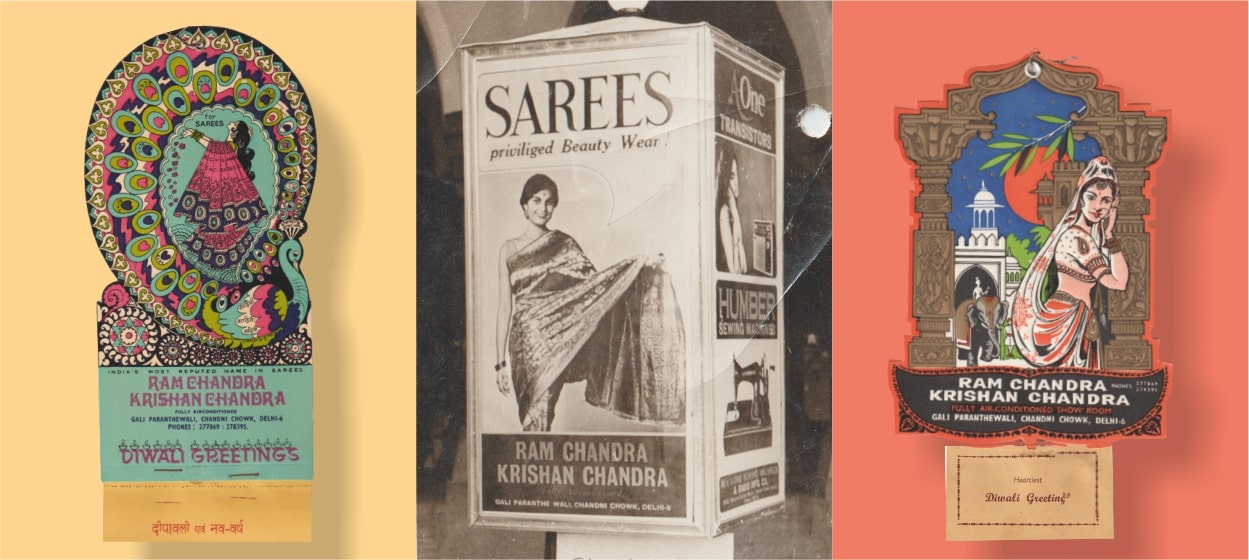
When Krishan Chandra Ji envisioned opening a shop, he chose a location beneath a masjid on a street known as Dariba Kurd. This street was renowned for its many eateries serving delectable parathas.
However, a slight confusion arose as customers often mistook Dariba Kurd for the renowned Dariba Kalan, famous for its exquisite silverware. Determined to resolve this predicament, Krishan Chandra Ji envisioned a new identity for his street.
With steadfast determination, Krishan Chandra Ji approached the then-British Government, with a request of changing the name of Dariba Khurd to Gali Paranthewali. After much persistence, this change was granted. Once granted, he proudly advertised the new address as Gali Paranthewali in newspapers, cementing its place in history.
Today, Gali Paranthewali stands as an iconic street, and our beloved store remains situated within its storied lanes, preserving the essence of its humble beginnings.
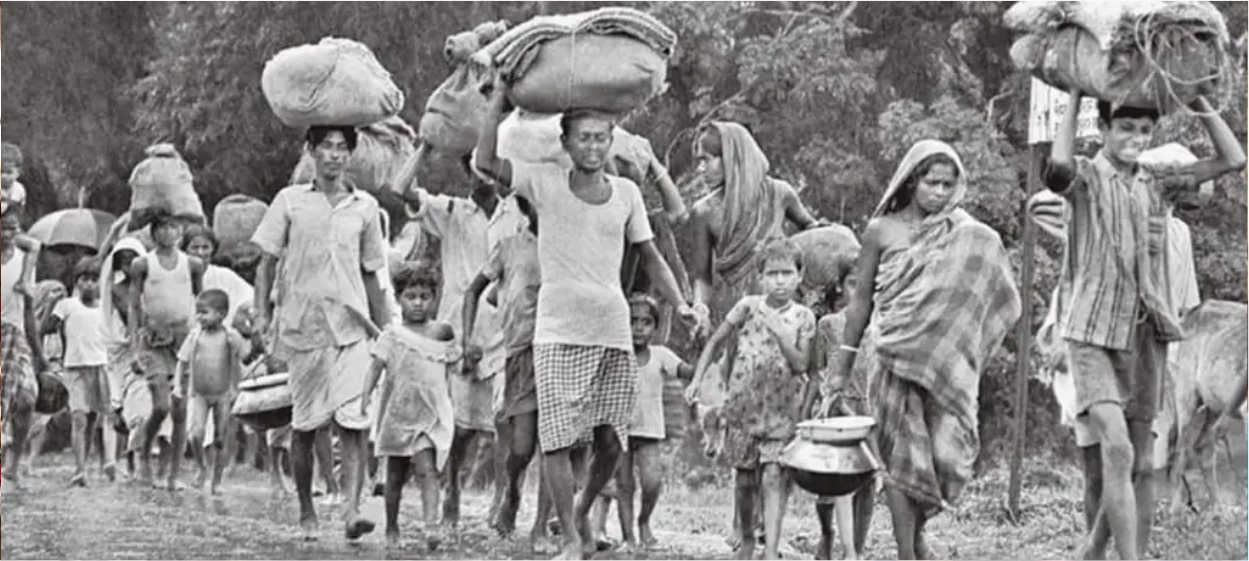
The 1998 Bangladesh Floods witnessed an urgent need for aid, and the Indian Government swiftly responded by offering assistance in various forms. Among the extensive list of essential supplies, including food and medical aid, were 100,000 cotton sarees and 100,000 lunges.
Recognizing the urgency of the situation, the government sought a reliable supplier who could fulfill this massive order within a remarkably short time frame. Aware of our extensive network and nationwide presence, the government agency, STC, approached us for this challenging endeavor. Rising to the occasion, we embraced the task with unwavering determination.
Mobilizing our procurement offices in Uttar Pradesh, Coimbatore, and Kolkata, and leveraging our extensive network of contacts across India, we worked tirelessly to meet this colossal demand.
In just 3 weeks, the sarees and lunges were collected and ready to be shipped.
This proud moment stands as a testament to India's commitment to supporting neighboring nations in times of crisis, and our unwavering dedication to delivering aid swiftly and effectively showcasing the prowess and efficiency of India.

The enchanting tale of Sonia Gandhi's reception saree, as shared by Mr. Subhash Chandra Rastogi, son of Shri. Krishan Chandra.
“On a winter morning, in 1967 there was a visit to our shop by Mrs. Teji Bachchan, accompanied by a lady named Mrs. Ami Krishna, who revealed their quest for a wedding reception saree for a prominent European lady.
Together, delved into multiple possibilities from various centers across India. After multiple considerations; we narrowed down the colors to pastel shades of pinks, oranges, aquas, or a pure Firoza. The preferred design was a delicately woven zari jungla in Banarasi Satin.
I commissioned various new concepts with master weavers and design centers in Banaras. I requested them to expedite their production. Finally, after a month, I had a selection to present to Mrs. Bachchan.
As I sat in an official car for the presentation of the sarees; I was surprised to learn that I was being taken to the Prime Minister's Office (PMO). The significance of the moment hit me when I learned that Mrs. Bachchan, and Mrs. Krishna, were entrusted with preparing and dressing Rajiv Gandhi’s wife-to-be. I was overwhelmed, realizing the importance of these sarees.
As I waited in the outer office of the PMO, a fair young man dressed in a white kurta entered. It was Rajiv Gandhi, who expressed his desire to see the sarees. With a mix of excitement and uncertainty, I opened the boxes, and he smiled, pointing to a pale orange satin silk Banarasi saree before leaving.
Soon after, Mrs. Bachchan arrived to view the sarees. I informed her that Rajiv had already chosen the pale orange Banarasi saree, to which she chuckled, exclaiming, "That's impossible! He's just not interested in all this." She then selected a few sarees and requested me to leave them for consultation with Mrs. Indira Gandhi.
Ultimately, the pale orange satin jangla saree, designed by Shri J.K. Supkar and woven by master weaver Haji Moinuddin in Banaras, was the chosen one. It graced Mrs. Sonia Gandhi on the occasion of the state reception, where Mrs. Indira Gandhi introduced her Italian daughter-in-law to the Indian dignitaries and society, etching a beautiful chapter in our journey.”
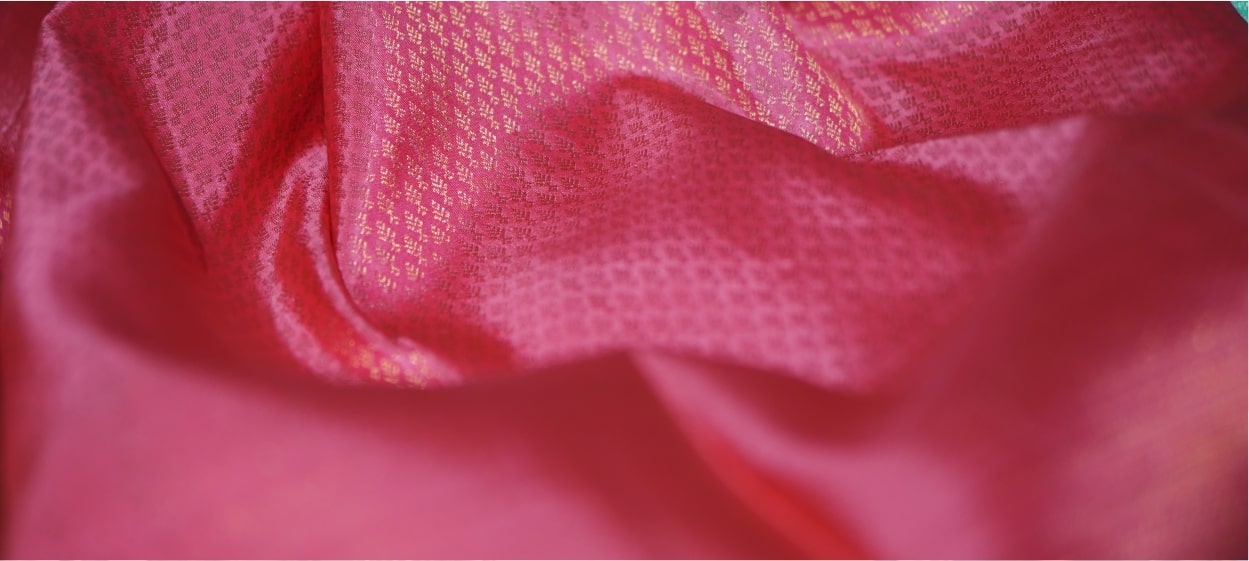
During the challenging times of the COVID-19 pandemic and the ensuing lockdown, we found ourselves without the usual pressures of production. Rather than remaining idle, we seized the opportunity to inspire our weavers and artisans across India to tap into their creativity and explore uncharted territories. We encouraged them to think outside the box, pushing the boundaries of traditional designs and venturing into unexplored realms.
One such innovation was in the woven sector near Kanchipuram which was the introduction of the pin dot design in weaving. Despite its seemingly simple nature, the intricacies of this design were skillfully woven into the fabric, showcasing meticulous craftsmanship and attention to detail. It was a revelation that even the subtlest of pin dots could be brought to life in the weave.
Another breakthrough came in the form of colored zari. Breaking away from the conventional gold and silver tones, we explored a palette ranging from shades of pink, blue, and green to captivating hues like rose gold, blue diamond, and bronze beige. The infusion of these captivating colors breathed new life into the traditional zari work, adding a touch of contemporary allure.
Combining these two remarkable developments, we embarked on creating a truly unique masterpiece – a soft silk saree adorned with noted zari work. This creation quickly captured the hearts of saree enthusiasts, becoming a sensation in the world of fashion. The blend of delicate craftsmanship, lustrous silk, and subtle colors resulted in a saree that exuded elegance and became a symbol of style and sophistication.
The versatility of these sarees knows no bounds. They can be paired with contrasting blouses featuring intricate threadwork, zardozi embellishments, or even a casual tee shirt for a fusion-inspired look. The possibilities are endless, allowing individuals to express their personal style and creativity with every drape.
When Krishan Chandra Ji envisioned opening a shop, he chose a location beneath a masjid on a street known as Dariba Kurd. This street was renowned for its many eateries serving delectable parathas.
However, a slight confusion arose as customers often mistook Dariba Kurd for the renowned Dariba Kalan, famous for its exquisite silverware. Determined to resolve this predicament, Krishan Chandra Ji envisioned a new identity for his street.
With steadfast determination, Krishan Chandra Ji approached the then-British Government, with a request of changing the name of Dariba Khurd to Gali Paranthewali. After much persistence, this change was granted. Once granted, he proudly advertised the new address as Gali Paranthewali in newspapers, cementing its place in history.
Today, Gali Paranthewali stands as an iconic street, and our beloved store remains situated within its storied lanes, preserving the essence of its humble beginnings.
The 1998 Bangladesh Floods witnessed an urgent need for aid, and the Indian Government swiftly responded by offering assistance in various forms. Among the extensive list of essential supplies, including food and medical aid, were 100,000 cotton sarees and 100,000 lunges.
Recognizing the urgency of the situation, the government sought a reliable supplier who could fulfill this massive order within a remarkably short time frame. Aware of our extensive network and nationwide presence, the government agency, STC, approached us for this challenging endeavor. Rising to the occasion, we embraced the task with unwavering determination.
Mobilizing our procurement offices in Uttar Pradesh, Coimbatore, and Kolkata, and leveraging our extensive network of contacts across India, we worked tirelessly to meet this colossal demand.
In just 3 weeks, the sarees and lunges were collected and ready to be shipped.
This proud moment stands as a testament to India’s commitment to supporting neighboring nations in times of crisis, and our unwavering dedication to delivering aid swiftly and effectively showcasing the prowess and efficiency of India.
The enchanting tale of Sonia Gandhi’s reception saree, as shared by Mr. Subhash Chandra Rastogi, son of Shri. Krishan Chandra.
“On a winter morning, in 1967 there was a visit to our shop by Mrs. Teji Bachchan, accompanied by a lady named Mrs. Ami Krishna, who revealed their quest for a wedding reception saree for a prominent European lady.
Together, delved into multiple possibilities from various centers across India. After multiple considerations; we narrowed down the colors to pastel shades of pinks, oranges, aquas, or a pure Firoza. The preferred design was a delicately woven zari jungla in Banarasi Satin.
I commissioned various new concepts with master weavers and design centers in Banaras. I requested them to expedite their production. Finally, after a month, I had a selection to present to Mrs. Bachchan.
As I sat in an official car for the presentation of the sarees; I was surprised to learn that I was being taken to the Prime Minister’s Office (PMO). The significance of the moment hit me when I learned that Mrs. Bachchan, and Mrs. Krishna, were entrusted with preparing and dressing Rajiv Gandhi’s wife-to-be. I was overwhelmed, realizing the importance of these sarees.
As I waited in the outer office of the PMO, a fair young man dressed in a white kurta entered. It was Rajiv Gandhi, who expressed his desire to see the sarees. With a mix of excitement and uncertainty, I opened the boxes, and he smiled, pointing to a pale orange satin silk Banarasi saree before leaving.
Soon after, Mrs. Bachchan arrived to view the sarees. I informed her that Rajiv had already chosen the pale orange Banarasi saree, to which she chuckled, exclaiming, “That’s impossible! He’s just not interested in all this.” She then selected a few sarees and requested me to leave them for consultation with Mrs. Indira Gandhi.
Ultimately, the pale orange satin jangla saree, designed by Shri J.K. Supkar and woven by master weaver Haji Moinuddin in Banaras, was the chosen one. It graced Mrs. Sonia Gandhi on the occasion of the state reception, where Mrs. Indira Gandhi introduced her Italian daughter-in-law to the Indian dignitaries and society, etching a beautiful chapter in our journey.”
During the challenging times of the COVID-19 pandemic and the ensuing lockdown, we found ourselves without the usual pressures of production. Rather than remaining idle, we seized the opportunity to inspire our weavers and artisans across India to tap into their creativity and explore uncharted territories. We encouraged them to think outside the box, pushing the boundaries of traditional designs and venturing into unexplored realms.
One such innovation was in the woven sector near Kanchipuram which was the introduction of the pin dot design in weaving. Despite its seemingly simple nature, the intricacies of this design were skillfully woven into the fabric, showcasing meticulous craftsmanship and attention to detail. It was a revelation that even the subtlest of pin dots could be brought to life in the weave.
Another breakthrough came in the form of colored zari. Breaking away from the conventional gold and silver tones, we explored a palette ranging from shades of pink, blue, and green to captivating hues like rose gold, blue diamond, and bronze beige. The infusion of these captivating colors breathed new life into the traditional zari work, adding a touch of contemporary allure.
Combining these two remarkable developments, we embarked on creating a truly unique masterpiece – a soft silk saree adorned with noted zari work. This creation quickly captured the hearts of saree enthusiasts, becoming a sensation in the world of fashion. The blend of delicate craftsmanship, lustrous silk, and subtle colors resulted in a saree that exuded elegance and became a symbol of style and sophistication.
The versatility of these sarees knows no bounds. They can be paired with contrasting blouses featuring intricate threadwork, zardozi embellishments, or even a casual tee shirt for a fusion-inspired look. The possibilities are endless, allowing individuals to express their personal style and creativity with every drape.